Free
Try the platform on full tests before you pay.
£0
No card, no account.
What you get
- 11 free tests
- No registration required
- Step-by-step solutions
- Detailed test reports
- Accessible on any device
Can we use analytics cookies? They show us how the website is used, so we can improve it. Read more in our privacy policy.
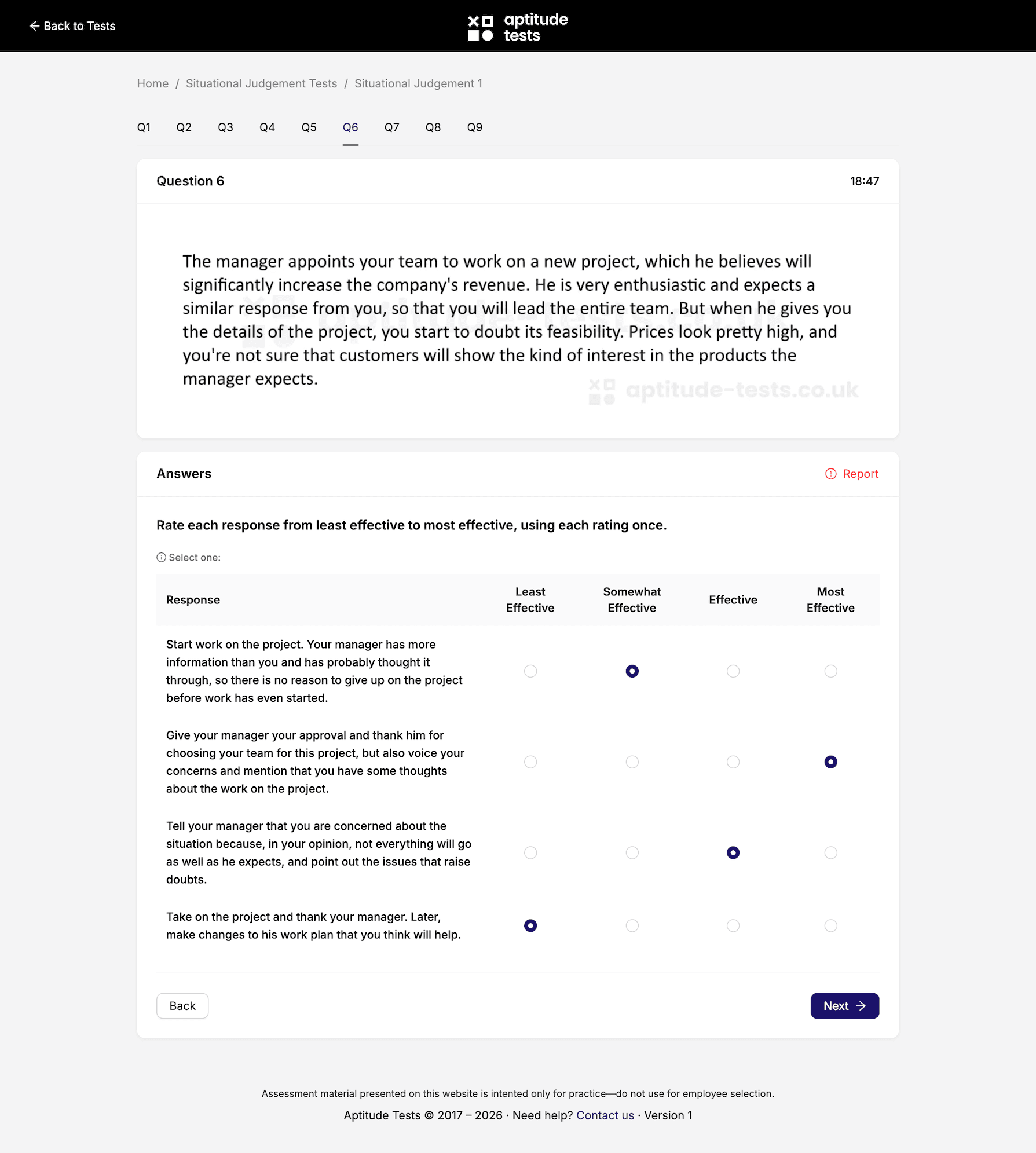
Employers use situational judgement tests to see how you would handle real problems at work. Practice on realistic workplace scenarios, with the preferred response explained for every one.
4 tests, 30 scenarios, 3 months access. 14-day money-back guarantee.
Which response is the most effective?
An error in a report
You are checking a sales report that goes to a client at 5 pm. A colleague's section uses last year's prices. Your colleague is at the next desk.
Which response is the least effective?
A late order
A customer phones about an order that is a week late. It left the warehouse yesterday and is due in two days. It is their second late order this month.
Which response is the most effective?
Two deadlines
Your manager wants a presentation by noon tomorrow. The finance director wants her figures by 10 am. You cannot do both, and your manager is on a flight.
Which response is the most effective?
Which response is the least effective?
Which response is the most effective?
Sample questions. Pick an answer to try one yourself.
316 practicing right now
4 tests in the package
No subscription and nothing renews. Buy the packages you need at £9.99 each, or get all six for £29.99. Every paid plan is covered by a 14-day money-back guarantee.
Try the platform on full tests before you pay.
What you get
Only the packages your employer uses.
Choose your packages
Inside Situational Judgement
All six packages, for £29.95 less than buying them one by one.
Everything included


14-day money-back guarantee on paid plans. Terms and conditions apply.
A short guide to the test: what it is, who uses it, the formats, what it measures, the scoring and how to prepare.
A situational judgement test shows you problems you could meet at work and asks how you would handle them. Each question is a short scenario with four or five possible responses. You judge the responses: which is the most effective, which is the least, or how they compare.
No special knowledge is needed, and nothing has to be calculated. What is being measured is your judgement: whether you choose what a good employee in that role would do.
Large employers use them to sift many applicants for roles that depend on dealing with people. The civil service, the NHS, police forces, banks, retailers and professional services firms set them for graduate schemes, and for entry-level and management roles.
The test usually comes early in the process, as a link in an email with a deadline a few days away. Each employer has its own version, written around the behaviours it wants in that job. Our company pages list the hiring stages at each employer.
Every question starts the same way, with a scenario and a list of responses. What changes is what you do with them: choose the best response, choose the best and the worst, rank them all, or rate each one.
Most tests are text on a page, and a few use video or a chat-style conversation. Our practice tests are text. Most of their scenarios ask for the best response or the best and the worst, and a few ask you to rate or rank them all.
Every employer's test is its own, so the number of scenarios and the time allowed are in your invitation. Cappfinity and the Civil Service are not connected with this site.
Each scenario is written around one or two competencies the employer wants in the role. Integrity, teamwork, customer focus and planning are among the most common.
The strongest response usually deals with the problem directly, early, and with the people involved. Responses that ignore the problem, hide it or blame someone else score lowest.
Your answers are marked against a key agreed with people who know the job well. The closer your choices are to theirs, the more marks you get, and many tests give part marks for a near miss.
Your total is then compared with other candidates, usually as a percentile, and the employer sets the pass mark. Our report shows your score and percentile after every practice test.
Start with the employer, not the test. Read the job description and the company's values, and note the behaviours they repeat: the scenarios are written to measure those.
Then practice the answer formats, and after each test read why the preferred response was preferred, including for the questions you got right. The reasons matter more than the score, because they show how an employer weighs one response against another.
Reviews of the Situational Judgement Tests package are shown first.
4.5 out of 5
475 ratings
Nadia Hussain, Rochdale
Situational Judgement Tests
NHS SJT
SJT pack for the NHS graduate scheme. The scenarios about colleagues and patients were in the same spirit as the real test. Got through the online stage, waiting for the assessment centre now. Thank you!
Freya W.
Situational Judgement Tests
Good SJT practice. Only thing is a few scenarios feel very corporate office, if you are applying for public sector it is less relevant. Explanations still make sense.
Tariq Mahmood, Luton
Situational Judgement Tests
Boots
SJT practice for a Boots store manager role. Customer scenarios very much in the same spirit. Did 4 tests twice each, the second time the logic really sank in. Got the job!
Kemi Adebayo, Croydon
Situational Judgement Tests
John Lewis Partnership assessment. SJT heavy, and the practice here nailed the style, you have to think like a partner not just an employee. Offer came through last Friday.
Fatima K., Birmingham
Situational Judgement Tests
SJT finally makes sense
I always struggled with situational judgement because there is no 'right' answer, or so I thought. The explanations here explain the logic behind why an option is rated most or least effective and after 4 tests I could see the pattern myself. Scored well on the real one.
Rahul Deshmukh, Pune
Situational Judgement Tests
HSBC SJT practice
Took the SJT pack for HSBC application. Scenarios are banking flavoured so quite relevant. Only 4 SJT tests though, I finished them in 2 days and wanted more. Explanations for why an option is most effective are good.
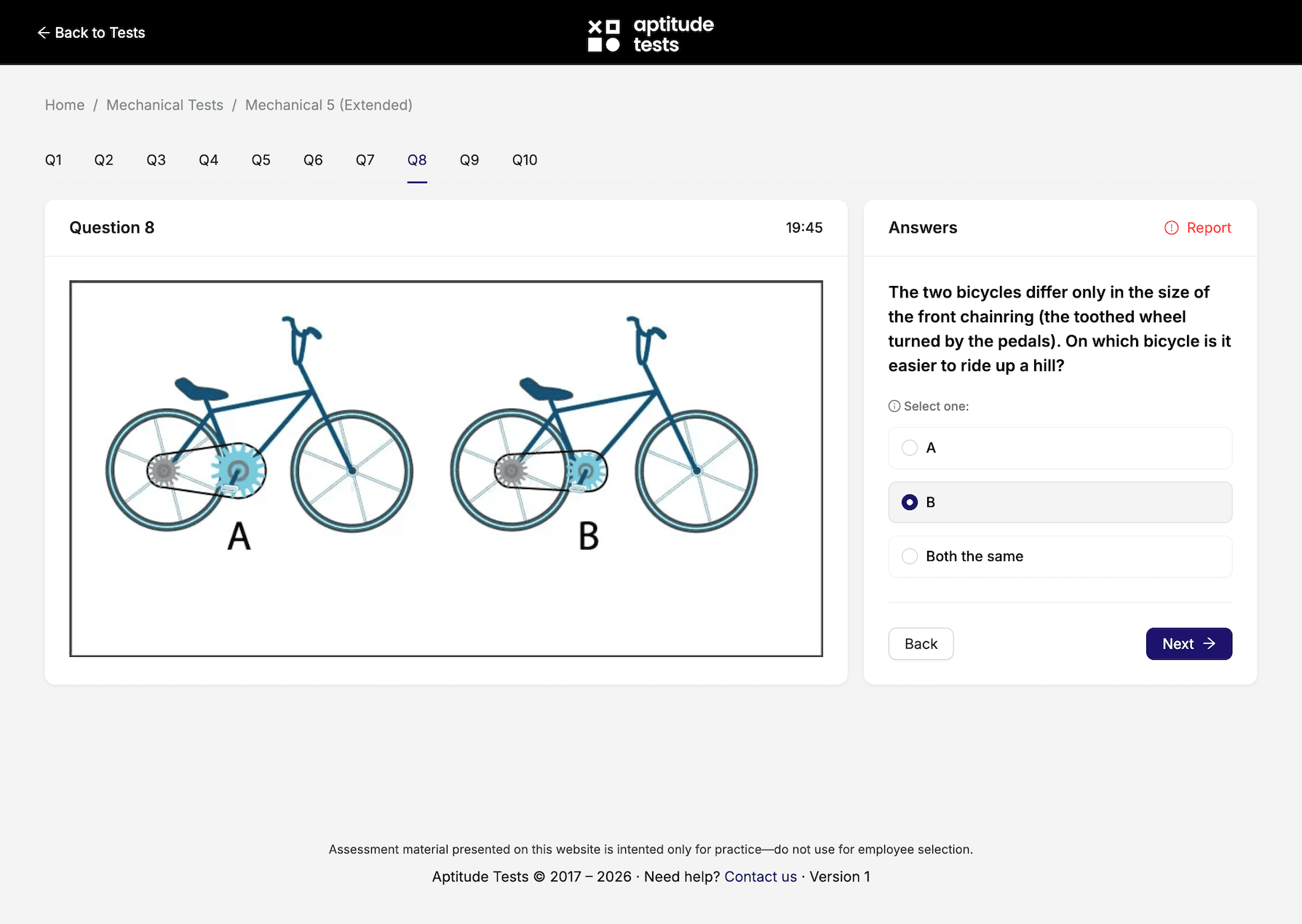
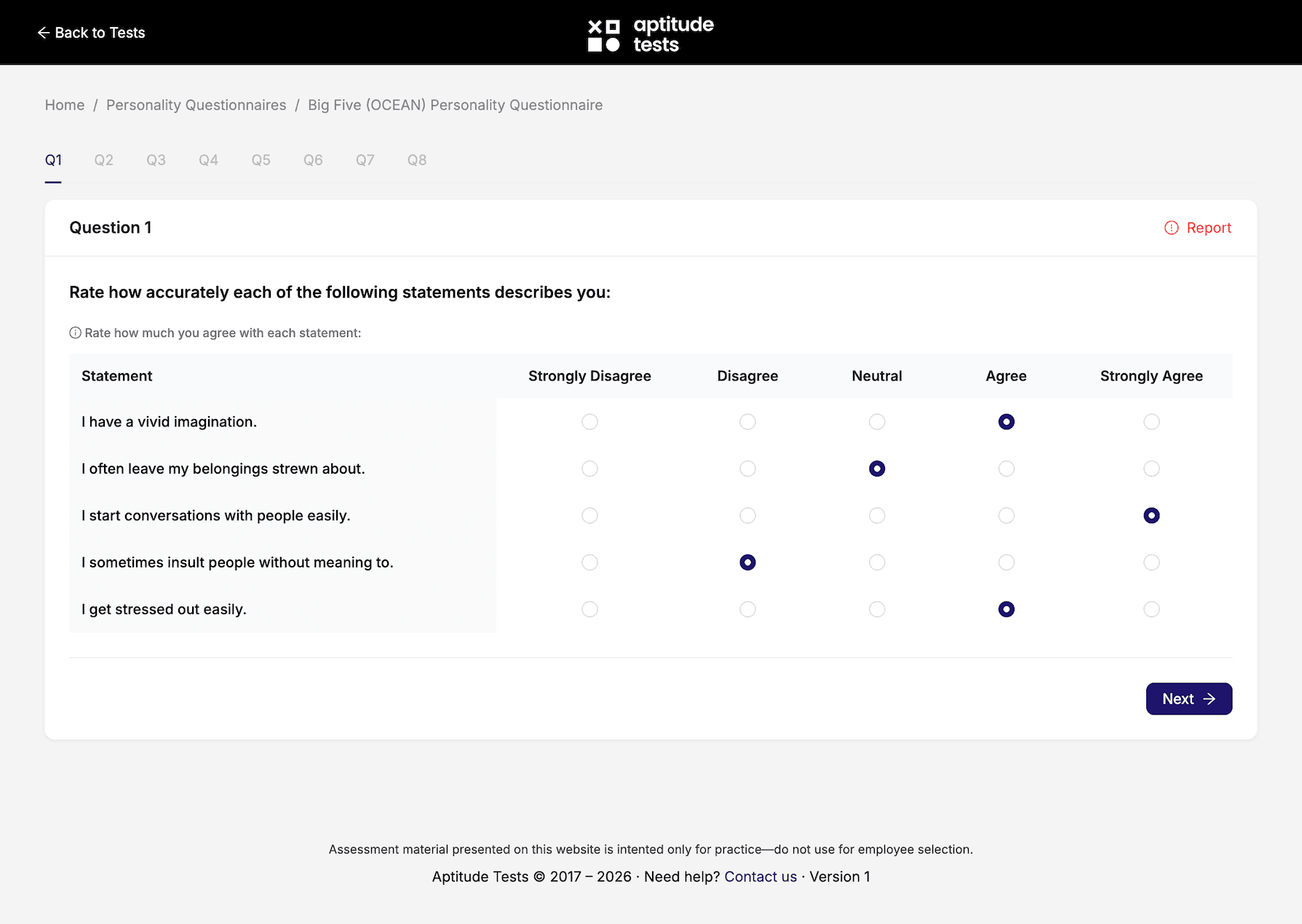
A situational judgement test often comes with reasoning tests. Pick a package to see what it covers and who it is for.
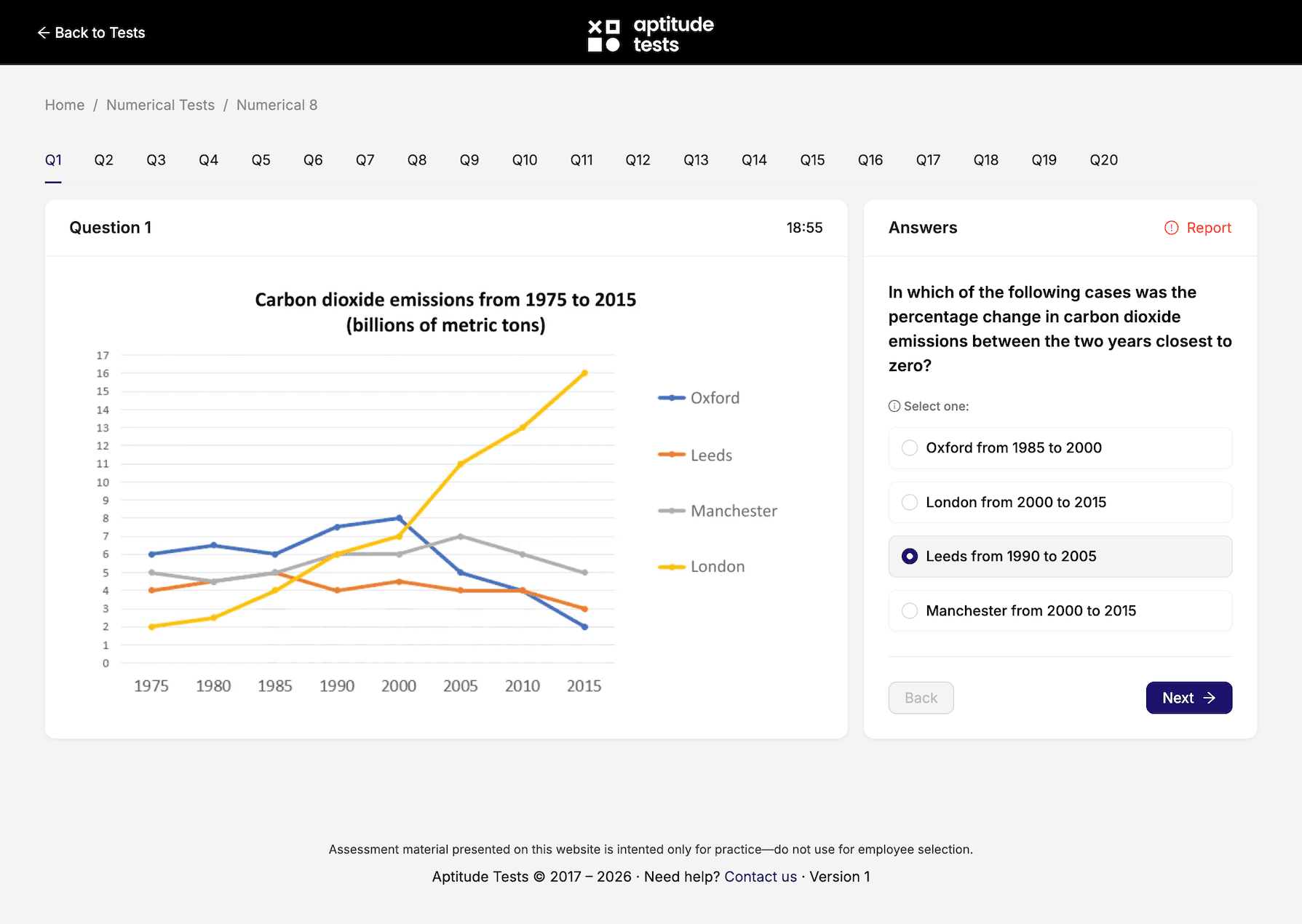
Numerical Tests
14 testsDetailed solutionsSHL, Kenexa style
Numerical reasoning tests assess how quickly and accurately you interpret data. Practice SHL and Kenexa style questions with a written step-by-step solution for every answer.
Short answers to what candidates ask most.
The full FAQ covers payments and your account. For anything else, write to support@aptitude-tests.co.uk.
Usually not. Most have no time limit and take about half an hour, and a few short ones are timed. Your invitation says which. Ours are timed by default, and you can turn the timer off.
Answer as you would act in that job, with the employer's values in mind. The same behaviours are tested again at interview, so an answer you do not believe is hard to keep up.
No. Graduate tests are written for people in their first job, and each scenario gives you the facts you need. Practice helps, because it shows you how responses are weighed.
No. Employers have their own scenarios written and keep them confidential. Ours cover the same kinds of competency and answer format, so you know how to weigh the responses before you see the real ones.
All four. The package has 30 scenarios between them.
Yes. Situational Judgement Test 1 has 5 scenarios and takes about 10 minutes, with explanations and a full report. You do not need an account or a card.
4 tests with 30 scenarios. Every scenario comes with an explanation of the preferred response and the competency it measures, and every attempt ends with a report of your score and percentile. It costs £9.99 for 3 months unlimited access, no auto-renew.
Yes. Every paid plan has a 14-day money-back guarantee. If something is wrong with the platform or the tests, email us within 14 days of buying. If you have started no more than three tests in a package, or four on the All-in-One, we refund what you paid. Other conditions apply.