Free
Try the platform on full tests before you pay.
£0
No card, no account.
What you get
- 11 free tests
- No registration required
- Step-by-step solutions
- Detailed test reports
- Accessible on any device
Can we use analytics cookies? They show us how the website is used, so we can improve it. Read more in our privacy policy.
Employers use inductive reasoning tests to see how well you work out a rule from a few examples and predict what comes next. Practice on timed rows and line-ups, with every answer explained step by step.
16 tests incl. Diagrammatic and Inductive, 3 months access. 14-day money-back guarantee.
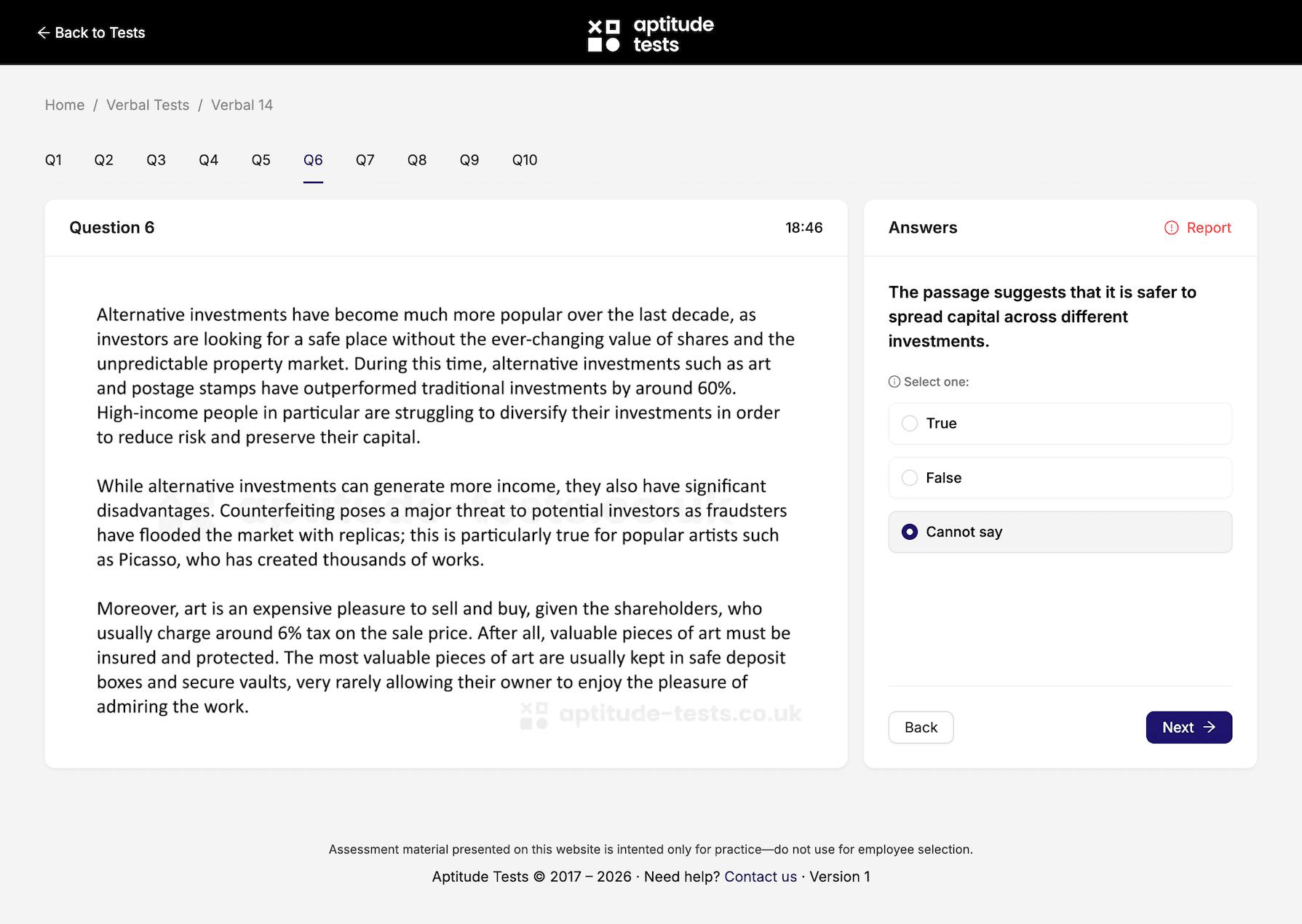
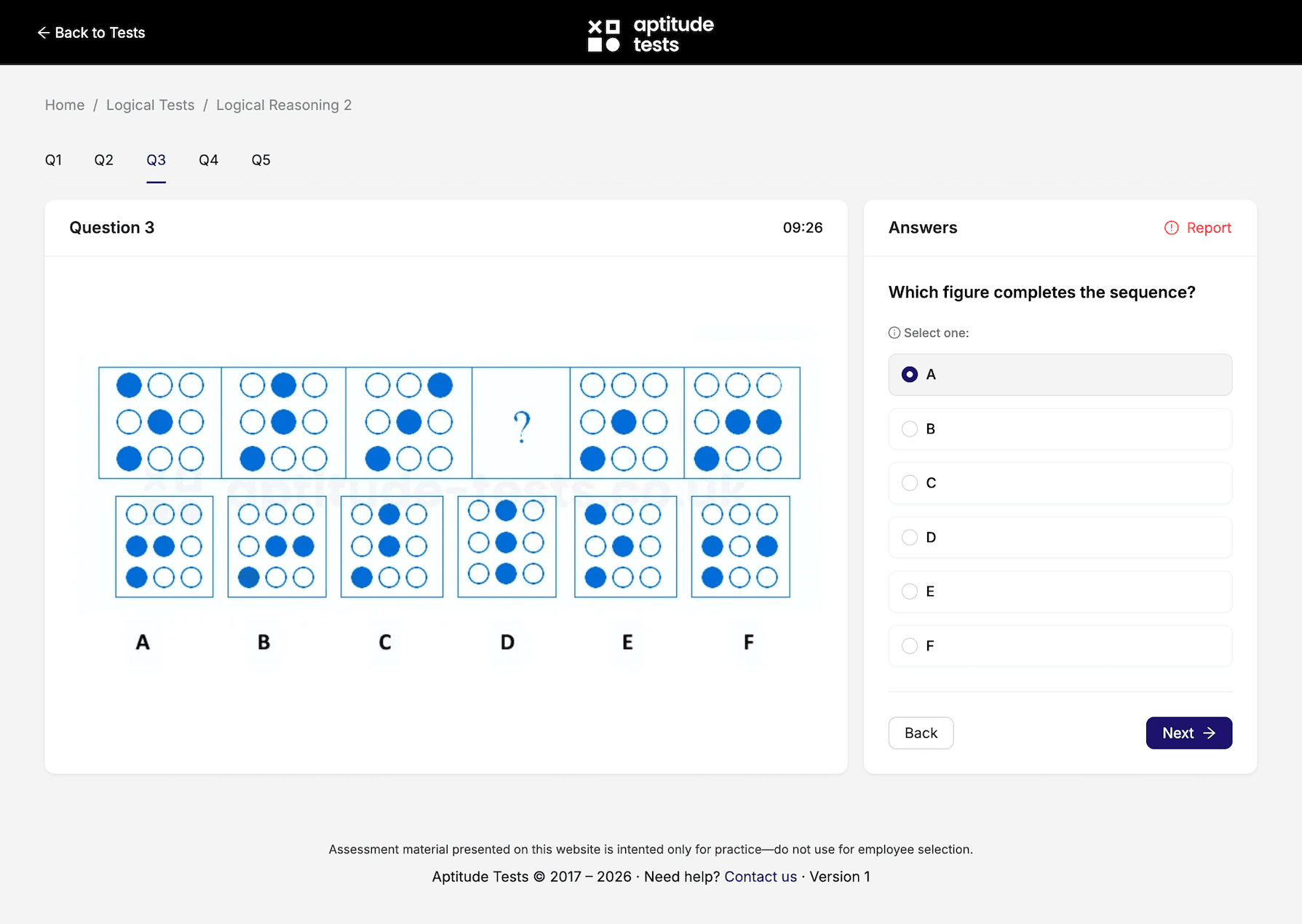
Which figure completes the row?
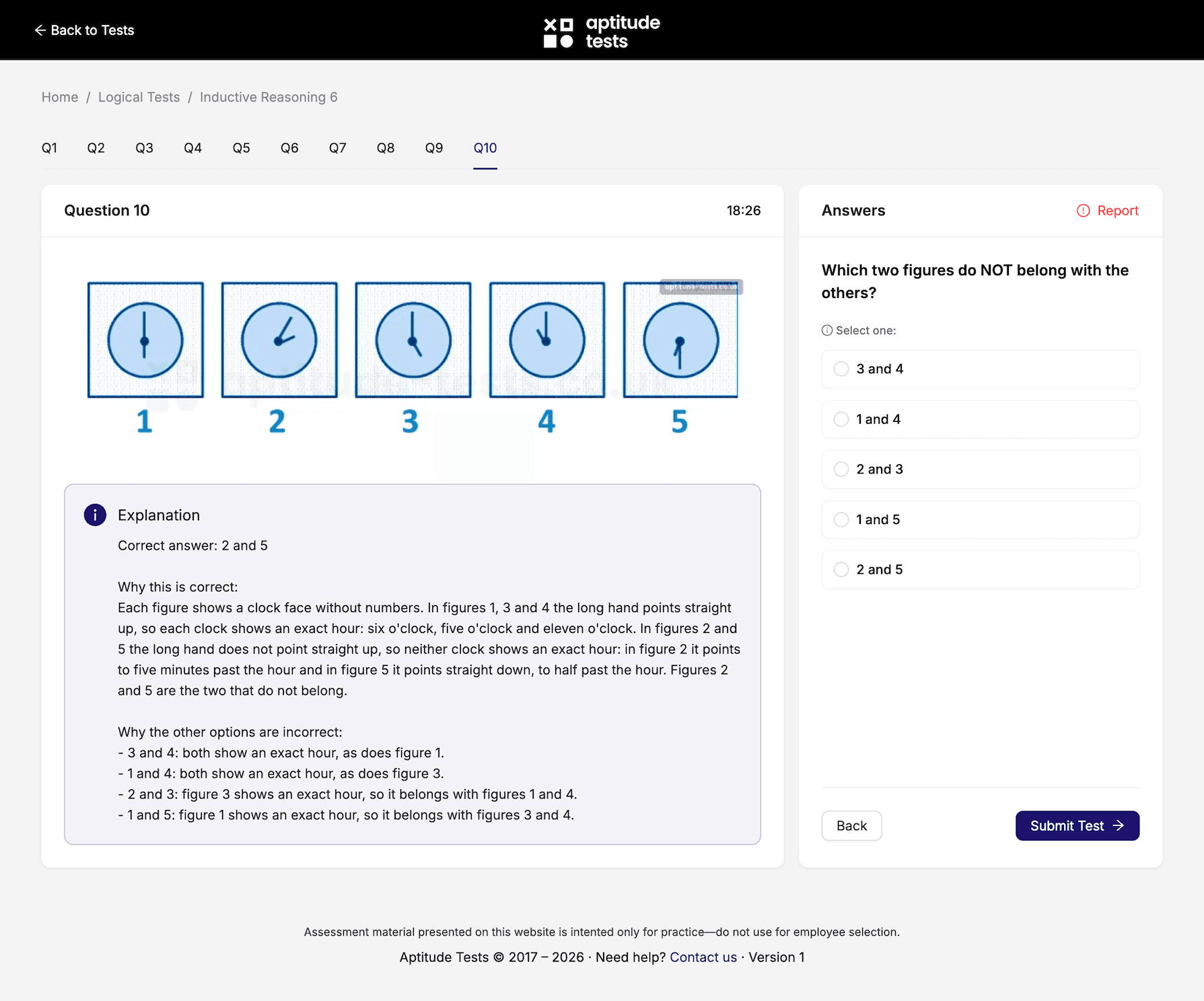
Which figure does not belong?
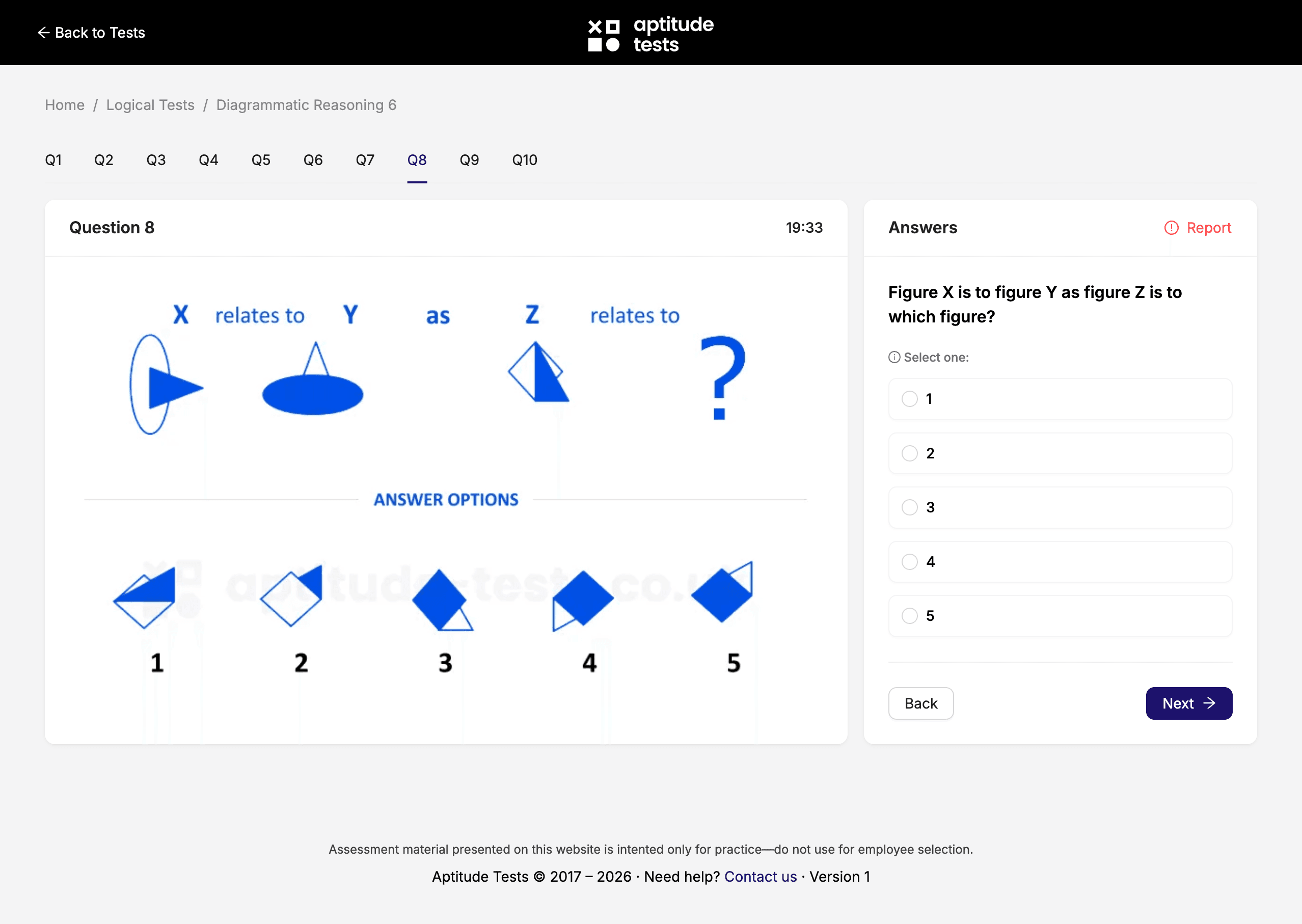
Which figure comes next?
Which figure completes the row?
Which figure does not belong?
Which figure comes next?
Sample questions. Pick an answer to try one yourself.
311 practicing right now
12 more tests in the package
No subscription and nothing renews. Buy the packages you need at £9.99 each, or get all six for £29.99. Every paid plan is covered by a 14-day money-back guarantee.
Try the platform on full tests before you pay.
What you get
Only the packages your employer uses.
Choose your packages
Inside Logical
All six packages, for £29.95 less than buying them one by one.
Everything included


14-day money-back guarantee on paid plans. Terms and conditions apply.
A short guide to the test: what it is, who uses it, the formats, the patterns, the scoring and how to prepare.
An inductive reasoning test asks you to work out a rule from examples. You are shown a few figures that follow it, and you decide which figure comes next or which one breaks it.
The rule is never stated: finding it is the test. Inductive tests are one part of our logical package, with logical reasoning tests and diagrammatic reasoning tests.
Inductive tests are common where the work keeps changing. SHL names product development, IT, professional services and management, and gives troubleshooting and creative problem solving as examples.
It is usually one of the first steps: the employer emails a link and gives you a few days. Our company pages list the hiring stages at each employer.
The formats differ in how you answer. In SHL's older test you choose the next figure from a list, in its interactive test you complete the answer on screen, and Aon asks you to sort figures into two sets.
Most run from 12 to 18 questions in 12 to 24 minutes. Ours come in sets of five or ten questions, with a timer you can switch off.
Multiple choice: work out the pattern in a set of images and choose the next one. It adapts to your answers.
Shapes and sequences of letters and numbers that you complete on screen, on a phone if you like.
Two sets of figures. Find the rule of each set, then sort four more figures. Aon's tests were cut-e's.
Rules in arrangements of shapes and symbols, with a time limit on each question.
These are the usual formats: an adaptive test may stop before its last question. Your invitation states the time allowed. SHL, Aon and Talent Q are trademarks of their owners, who are not connected with this site.
Four patterns do most of the work. Something is added or taken away, two states take turns, a shape moves, or one figure breaks a rule the others keep.
A hard question hides two of them in one row. Check one feature at a time, and try your rule on every figure before you trust it.
Your result is a percentile: the share of people who took the same test and scored below you. Adaptive tests, such as SHL's, get there in fewer questions by making each one harder or easier than the last.
The pass mark is the employer's to set, and it changes with the job. Our report shows your score, accuracy and percentile after every practice test.
Ask the same four questions of every figure: how many, where, which way, what shade. Keep a note of the rules that caught you out, and read it before your next test.
Then practice against the clock. Real tests allow about a minute a question, which is one careful look and not much more.
Reviews of the Logical Tests package are shown first.
4.5 out of 5
475 ratings
Dan Morgan, Bristol
Logical Tests
Revolut
Revolut ops role had a logical test. Did the inductive and diagrammatic ones here for a week. Passed first go. Decent price too.
Ravi Chandran, Coventry
Logical Tests
Philips graduate programme. Inductive reasoning section is what I came for. Six inductive and six diagrammatic tests here, did each twice. Real test was the same flavour of pattern questions. Through to the next round.
Kenji Watanabe, Tokyo
Logical Tests
Logical
Good inductive and diagrammatic practice. The diagrammatic operators are explained well. Site is English only, fine for me but my friend struggled a bit with the explanations.
Chidi O.
Logical Tests
Logical pack
The logical pack has three kinds, inductive, diagrammatic and logical reasoning. I did not know the difference before. Now I do, and I passed.
Sunita Rao, Leicester
Logical Tests
Inductive reasoning
The inductive tests are good, the diagrammatic ones with the operators took me a while to get the hang of but that is the point I suppose. Would give 5 if there were a few more of the harder ones.
Lukas F., Munich
Logical Tests
Gut für Siemens
Habe die logischen Tests für den Siemens Online Test genutzt. Die induktiven Aufgaben mit den Mustern waren fast identisch zum echten Test. Erklärungen sind auf Englisch, war für mich aber kein Problem. Klare Empfehlung.
Employers who set an inductive test may set others with it. Pick a package to see what it covers and who it is for.
Numerical Tests
14 testsDetailed solutionsSHL, Kenexa style
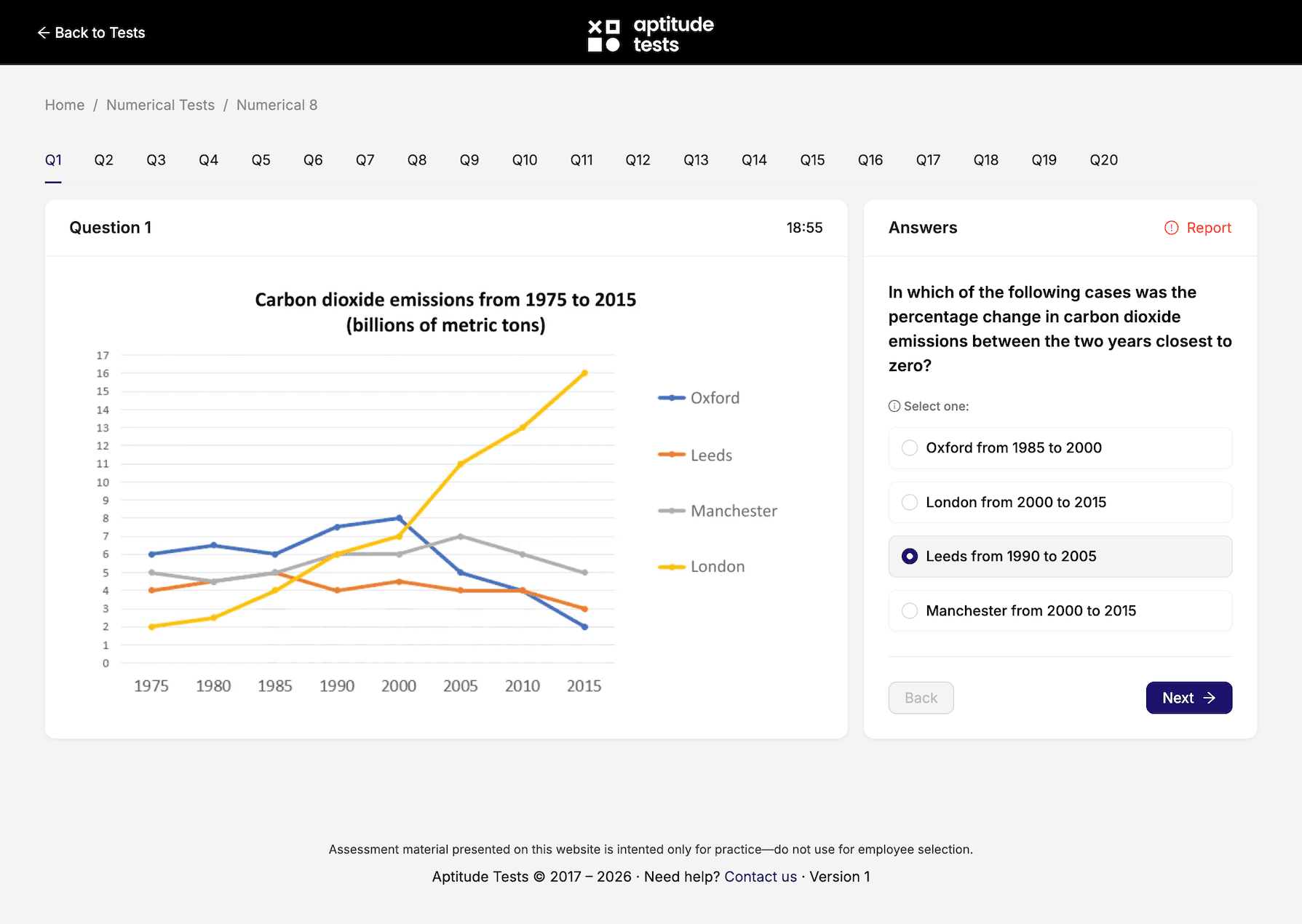
Numerical reasoning tests assess how quickly and accurately you interpret data. Practice SHL and Kenexa style questions with a written step-by-step solution for every answer.
Short answers to what candidates ask most.
The full FAQ covers payments and your account. For anything else, write to support@aptitude-tests.co.uk.
They run in opposite directions. A deductive test gives you the rules and asks what must follow. An inductive test gives you examples and leaves the rule to you.
Yes, in practice. SHL calls its test inductive reasoning, and other publishers call theirs abstract or logical. All of them ask you to find the rule in a set of figures.
Look at every second figure, because two series are sometimes woven together. If that fails, rule out the answers that break a rule you are sure of and choose from what is left.
No. They are part of the logical package: six inductive tests among its 16, with the logical and diagrammatic ones. £9.99 covers all three kinds.
Yes. Inductive Reasoning Test 1 has 5 questions and a 10-minute limit, with solutions and a full report. You do not need an account or a card.
16 timed tests with 110 questions, each with a step-by-step solution, and a report with your score, accuracy and percentile after every attempt. It costs £9.99 for 3 months unlimited access, no auto-renew.
Yes. Every paid plan has a 14-day money-back guarantee. If something is wrong with the platform or the tests, email us within 14 days of buying. If you have started no more than three tests in a package, or four on the All-in-One, we refund what you paid. Other conditions apply.